
OPTIMISING ASSET MANAGEMENT: THE POWER OF BUSINESS-FOCUSED MAINTENANCE (BFM)
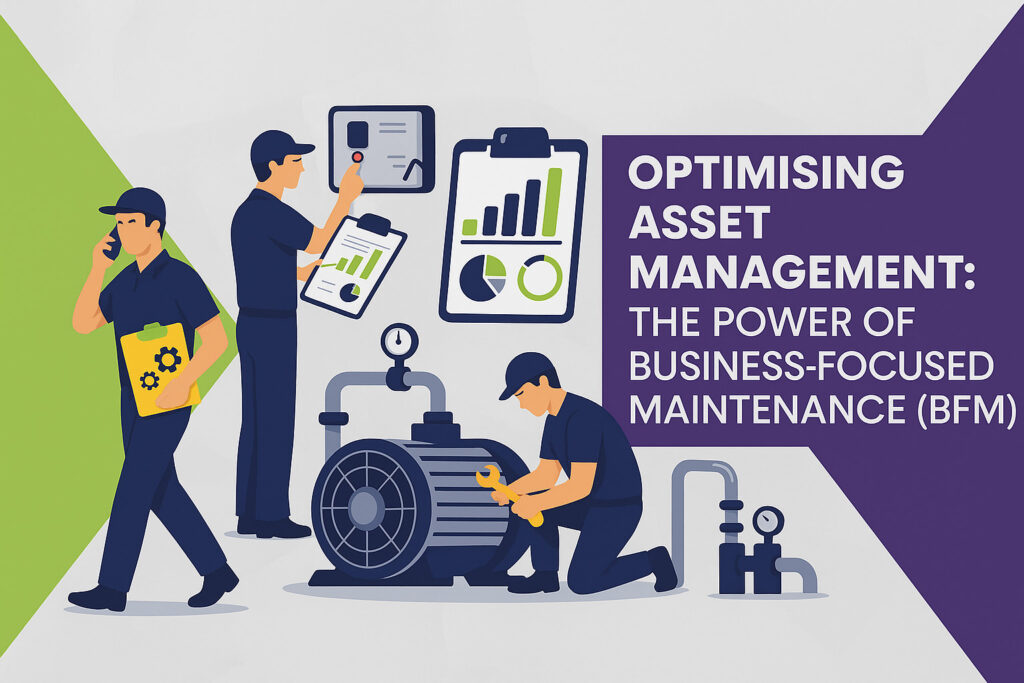
Introuduction A In today’s rapidly evolving operational landscape, traditional maintenance models often fall short in balancing cost efficiency, compliance, and asset longevity. Enter Business-Focused Maintenance (BFM)—a strategic, data-driven approach that aligns maintenance activities with an organisation’s core objectives. Why BFM? Unlike rigid, routine-based maintenance schedules, BFM prioritises risk-based asset management, ensuring resources are allocated efficiently. This means focusing on missioncritical systems (HVAC, security, fire safety), compliance-critical assets (elevators, water systems), and operational-critical infrastructure (lighting, mechanical plant equipment). The Key Advantages Cost Efficiency: Reduces unnecessary maintenance expenditure by targeting high-value assets Operational Continuity: Operational Continuity – Minimises disruptions by prioritising key systems Data-Driven Optimisation: Uses analytics and predictive maintenance to enhance reliability. Sustainability: Supports energy-efficient and regulatory-compliant maintenance practices Implementation Insights BFM requires an accurate asset survey and categorisation, a forward maintenance replacement strategy, and a risk-based prioritisation model that evaluates assets based on operational impact, regulatory compliance, financial implications, and failure likelihood.. Challenges & ConsiderationsWhile BFM offers numerous benefits, transitioning from traditional maintenance models can present challenges, such as initial investment in technology, cultural resistance, and ensuring high-quality data for decision-making. However, integrating IoT and predictive analytics can significantly enhance implementation success. As organisations strive for efficiency, resilience, and sustainability, BFM presents a compelling strategy to maximise asset reliability while reducing unnecessary costs. How can we help?Let’s discuss thechallenges and bestpractices inimplementing BFM! How can we help? 💡 Is your organisation leveraging a business-focused approach to maintenance?
EXTEND THE LIFE OF YOUR AHUS WITH AN INTRUSIVE SURVEY – A SMARTER ALTERNATIVE TO REPLACEMENT

Introuduction At KAM Surveys Ltd, we help businesses maximiSe the lifespan of their air handling units (AHUs) through intrusive air handling surveys a cost-effective solution that can significantly reduce the need for full system replacements.Our detailed, hands-on assessments uncover internal issues such as corrosion, coil deterioration, and mechanical wear. With this insight, we can recommend targeted refurbishments, including: By refurbishing rather than replacing, you can extend asset life, reduce capital expenditure, and improve operational efficiency with minimal disruption. Before committing to an expensive AHU replacement, let us assess whether refurbishment is the smarter choice for your facility.
ADVANCING ASSET MANAGEMENT:A STRATEGIC LEAP FORWARD

We are thrilled to share our newly developed Engineering Life Cycle Replacement Strategy. This framework offers a systematic, data-driven approach to ensure reliability, compliance, and cost-effectiveness inmanaging critical infrastructure. Key Highlights: 🔑 Industry Benchmarking: Leveraging life expectancy standards for informed planning.🔎 Detailed Asset Condition Assessment: Grading from fully operational to requiring immediate action.📊 Criticality Scoring System: Evaluating impact on operations, compliance, and objectives.Prioritization Using RAG Methodology: 🟥 Red: Immediate replacements for high-criticality, poor-condition assets🟧 Amber: Planned upgrades within 1-3 years, aligned with broader projects🟩 Green: Deferred replacements for low-risk, high-performing assets Conclusion At its core, this strategy emphasises data accuracy, cost-benefit analysis, and regulatory adaptability, empowering proactive, efficient decisionmaking. The outcome? Optimised resources, enhanced reliability, and alignment with institutional goals. This comprehensive approach ensures that the infrastructure supporting the business and operations remains robust and future ready. 💡 Let’s discuss how innovative strategies like this can transform assetmanagement in your business.
THE IMPORTANCE OF ASSET MANAGEMENT INFACILITIES SERVICES

Introduction In facilities management, asset data refers to detailed information about a facility’s physical assets, including (not limited to) their condition, forecasted replacement costs, location, and maintenance history. This data is crucial for maintaining, operating, and optimising assets. As built environments become more complex, asset data plays a growing role in both effective strategic and operational management. The collection and management of this data relies on advanced technologies like loT sensors and CAM systems, which provide actionable insights for better decision-making, efficiencies, and cost savings. Asset data is more than just record-keeping, it drives innovation and improvements across the industry. Importance of Asset data Asset data is fundamental to achieving operational efficiency, as it provides vital information for making informed decisions. Having accurate and up-to-date asset data is essential for success. It allows facilities managers to gain a comprehensive understanding of asset performance. This knowledge can assist in optimising maintenance schedules, effectively allocating resources, and ensuring compliance with regulations (statutory and non-statutory). Without reliable data, facilities managers can encounter difficulties in forecasting maintenance needs, which can lead to increased downtime and elevated costs. As the industry evolves, the importance of robust asset data management systems becomes increasingly clear, promoting greater efficiency and strategic decision-making, especially with ongoing technological advancements in operations. Impact of Efficency Asset data is vital for enhancing operational efficiency. The insights it provides allows managers to streamline maintenance and optimise operations. This data-driven approach enables precise scheduling, minimises downtime, and helps predict maintenance needs, preventing unexpected costly failures. The use of technology, such as loT sensors and automated systems, enhances data collection and real-time monitoring, improving decision-making and ensuring data accuracy. Facilities service providers utilising data-driven asset management, report faster response times and reduced operational costs. By leveraging technology, managers unlock greater efficiencies, leading to improved decision-making and strategic planning. This integration sets the stage for further internal discussions on how asset data enhances decision-making. Enaching Decision-making Asset data is central to improving decision-making processes. With access to comprehensive and accurate asset information, facilities managers can engage in more strategic planning and resource allocation, ensuring decisions are made with greater precision and aligned with organisational objectives. This data-driven approach optimises resource use and enhances overall operational outcomes. The incorporation of data analytics has transformed predictive maintenance and risk management. By analysing patterns and trends within asset data, managers can anticipate potential failures and take proactive measures, reducing downtime and extending the lifespan of assets. This predictive capability not only boosts operational efficiency but also mitigates the risks associated with unexpected breakdowns and ensure compliance with statutory regulations. Real-world examples highlight the transformative impact of asset data on decision-making. Facilities service providers that have adopted data analytics report substantial improvements in forecasting maintenance needs and effectively allocating resources. These advancements lead to tangible benefits, including lower operational costs and improved service delivery.As we explore the potential of asset data further, it becomes clear that its role goes beyond enhancing operational efficiency. Asset data is a vital tool for strategic decision-making, empowering facilities managers to tackle complex challenges with confidence. This paves the way for examining the cost-saving advantages of optimised asset management, which we will address next. Cost Savings Cost savings are essential, and precise asset data is crucial for financial efficiency. Accurate data allows for optimised asset management, reducing downtime, extending equipment life, and preventing costly emergency repairs. It also aids in budgeting and financial planning, enabling businesses to make informed decisions on capital expenditures and effective resource allocation. This data-driven approach helps identify underperforming assets for replacements or upgrades, ensuring investments yield the highest returns. The integration of technology significantly strengthens these cost-saving initiatives. Advanced data analytics and predictive maintenance tools facilitate the early detection of potential problems, allowing for timely interventions that avert expensive breakdowns. By leveraging asset data, facilities managers can achieve not only immediate cost reductions but also support long-term financial sustainability. As we approach the conclusion, it’s clear that investing in robust data management systems is no longer just a strategic advantage-it’s essential for future-proofing facilities management. Conclusion In conclusion, asset data is a key driver in facilities management, supporting both operational efficiency and strategic decision-making. As discussed, accurate and comprehensive asset data not only streamlines maintenance and operations but also improves predictive maintenance and risk management through advanced analytics. The cost savings from optimised asset management, reduced downtime, and extended asset lifespan highlight the financial advantages of strong data practices. Facilities managers should prioritise investing in advanced data management systems to fully leverage asset data, keeping their operations competitive and forward-thinking. As technology continues to advance, the future of asset data promises even greater innovations and efficiencies. Embracing these developments will be essential for facilities managers striving to excel in an increasingly data-driven industry